
Available 24/7/365

AC Deep Cleaning Service in Plano, TX - Because a Tune-Up Only Goes So Far

There’s a difference between an air conditioner that runs and one that runs clean. Standard annual maintenance keeps your system functional. Deep cleaning takes care of what builds up invisibly over time — inside the coils, inside the blower housing, inside the drain pan — and quietly makes your system less efficient, your air quality worse, and your repair bills bigger.

If your home takes longer to cool than it used to, your energy bills have crept up without explanation, or there’s a musty smell when the AC kicks on, you’re not dealing with a broken system. You’re dealing with a dirty one. And dirty systems don’t get fixed with a filter change.

What Actually Builds Up Inside Your AC — And Why It Matters

Your air conditioner moves somewhere between 400 and 600 cubic feet of air per minute through a network of coils, fins, and a blower wheel. Every bit of that air carries dust, pollen, pet dander, cooking grease particles, and whatever else is floating around your home. Over a few cooling seasons, a portion of that always ends up coating the internal components.

Here’s what that buildup actually does to your system and your home:

What's Included in Our AC Maintenance Tune-Up

The evaporator coil is the component that actually removes heat from your indoor air. It’s a tightly packed grid of aluminum fins and copper tubing, and it operates at around 40°F. That cold surface attracts and holds onto any airborne particles that pass over it.

Even a thin layer of dust acts as insulation, reducing the coil’s ability to absorb heat. According to ASHRAE research, just 0.042 inches of fouling on a coil surface can reduce heat transfer efficiency by up to 21%. For a homeowner in Plano running the AC heavily from May through October, that translates directly into a higher electric bill every single month.

Worse, the moisture on the coil surface creates the perfect conditions for microbial growth. Mold and bacteria colonies can form on the coil fins and get distributed throughout your home every time the system runs.

Blower Wheel Buildup — Hidden Airflow Restriction

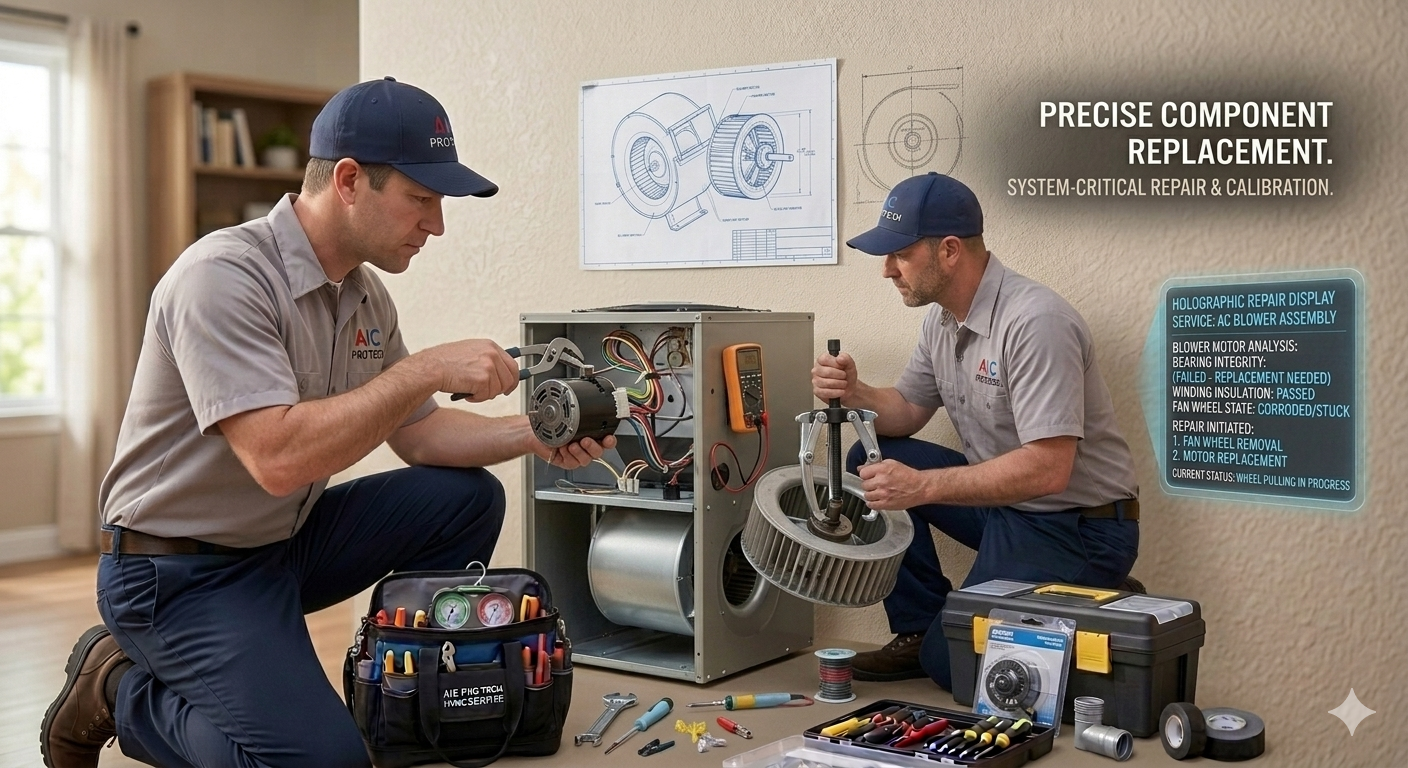
The blower wheel is the fan that pushes conditioned air through your duct system. Its curved blades are designed to move a precise volume of air. When those blades get coated in dust and grease — which happens gradually and invisibly over time — the wheel becomes unbalanced, and the effective surface area of each blade shrinks.
A dirty blower wheel can reduce airflow by 15 to 30 percent. That means your system has to run longer to move the same volume of air, your compressor works harder, and your comfort suffers. It's also one of the most common causes of that "AC runs all day and the house still feels warm" complaint.
Drain Pan and Condensate System — Where Mold Actually Lives

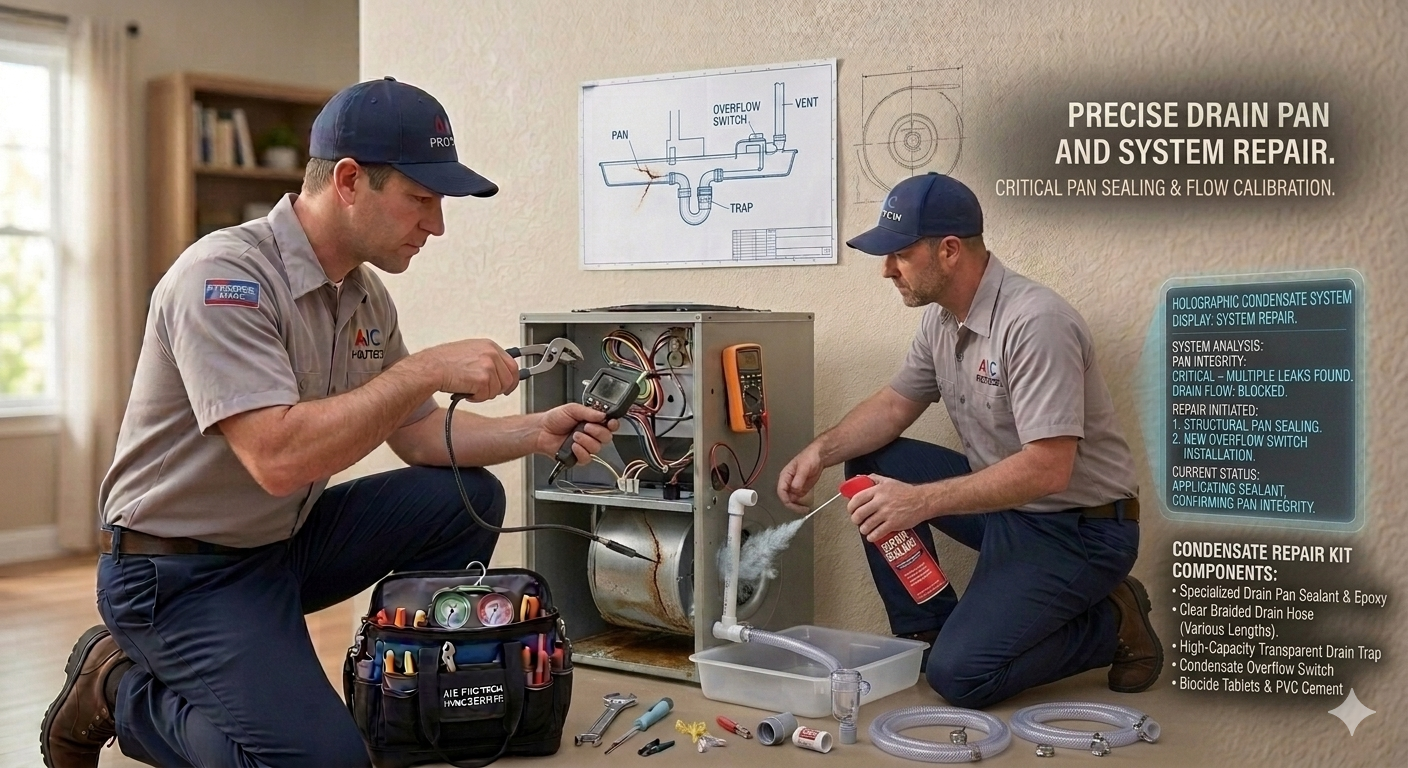
The condensate drain pan sits beneath the evaporator coil and collects the moisture that drips off the cold coil surface. In a Plano summer, that can be several gallons of water per day.
Standing water plus dark space plus organic debris equals mold. Not metaphorically — literally. Algae and mold colonies in the drain pan are extremely common in humid Texas summers, and the odor from that growth gets pushed straight into your living space every time the air handler runs. A clogged drain line also causes the pan to overflow, which leads to water damage in ceilings, walls, and attic insulation.
Condenser Coil Fouling — The Outdoor Unit Problem

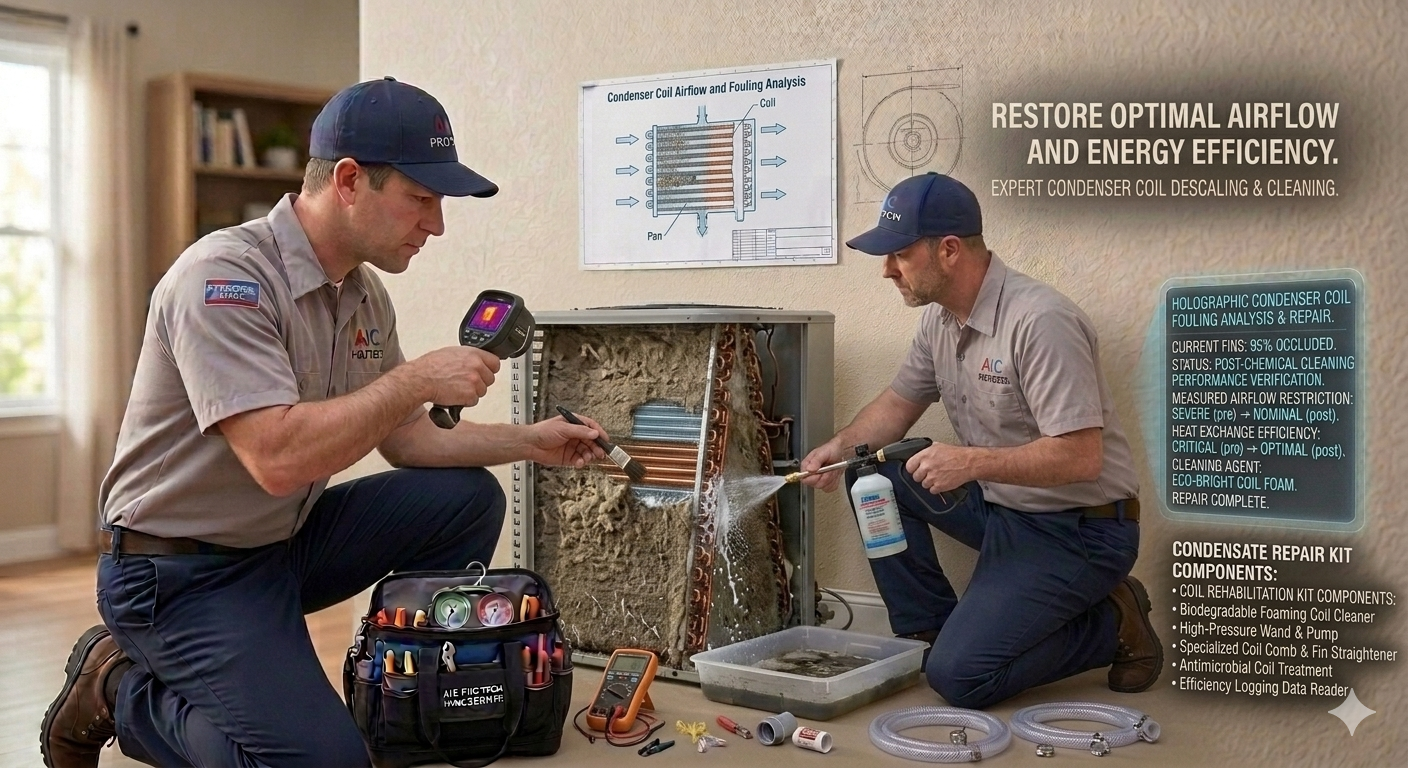
The outdoor condenser unit has a job that's almost the reverse of the evaporator coil — it releases the heat that was absorbed from your home into the outside air. Cottonwood seeds, grass clippings, airborne dirt, and general debris accumulate on the condenser fins over time, blocking airflow and forcing the compressor to work under elevated head pressure. High head pressure strains the compressor — the most expensive single component in your entire HVAC system. A compressor replacement runs $1,200 to $2,500. A condenser coil cleaning costs a fraction of that.

Regular Maintenance vs. AC Deep Cleaning — What's the Difference?

A lot of homeowners assume their annual tune-up covers everything. It doesn’t — and that’s not a criticism of maintenance, it’s just the reality of what each service is designed to do.

What Gets Done Standard Tune-Up Deep Clean
Filter replacement
Electrical connections check
Refrigerant level check
Evaporator coil inspection Visual Inspection Full Clean
Evaporator coil foam cleaning
Blower wheel cleaning
Drain pan disinfection
Condensate line flush + treatment
Condenser coil pressure wash
Microbial treatment / antimicrobial
Before/after airflow measurement

Think of a tune-up as a checkup and a deep clean as a detailed service. Both are necessary. They just do different things.

What Our AC Deep Cleaning Service Includes

We don’t cut corners because we know what we’re cleaning affects the air your family breathes. Here’s exactly what our technicians do during a deep cleaning visit:

Indoor Air Handler Unit

  • Remove and inspect air handler access panels
  • Apply EPA-registered foaming coil cleaner to evaporator coil fins — let dwell time work for full penetration
  • Rinse coil with low-pressure water where accessible, using no-rinse cleaner on sealed units
  • Clean and straighten bent coil fins with fin comb for restored airflow
  • Remove blower assembly and manually clean each blade of the blower wheel
  • Clean and degrease blower housing
  • Scrub and disinfect condensate drain pan with antimicrobial treatment
  • Flush condensate drain line with pressurized nitrogen or CO2, followed by algaecide tablet placement
  • Inspect and clean the air handler cabinet interior

Outdoor Condenser Unit

  • Rinse condenser coil fins with low-pressure water from inside out to push debris outward
  • Apply coil cleaner as needed for heavy fouling or grease buildup
  • Straighten bent condenser fins
  • Clear vegetation, debris, and obstructions around the unit base and top
  • Clean condenser fan blade
  • Inspect and clean inside the electrical compartment

Performance Verification

  • Measure and document supply air temperature before and after cleaning
  • Check system static pressure if airflow issues were present
  • Run the system through a complete cooling cycle post-cleaning
  • Provide written report including before/after documentation

A note on 'coil sprays' from hardware stores:

DIY no-rinse coil sprays have their place for light surface dust. They don't penetrate deeply fouled coils, they don't address blower wheels or drain pans, and applied incorrectly they can damage aluminum fins or leave residue that hardens over time. For systems that haven't been deep cleaned in 2+ years, professional cleaning with the proper equipment and dwell time is the right call.

The system hasn't been deep cleaned in 2 or more years — even with regular annual maintenance

There's a musty, moldy, or sour smell when the AC runs — especially in the first few minutes

Airflow from vents feels noticeably weaker than it used to

The home takes significantly longer to reach the set temperature than it did a few years ago

Energy bills have increased 15–25% year-over-year without changes in usage habits

You have pets, or someone in the household has allergies or asthma that seem worse indoors

The system was in a home that was vacant, under renovation, or had water damage

You recently purchased the home and don't know the last time it was serviced

The previous HVAC service company only changed the filter and checked refrigerant

How to Know If Your AC Needs a Deep Clean (Not Just a Tune-Up)

There’s no perfect universal answer, but these are the clearest indicators that a deep cleaning is overdue:

If three or more of those apply, you’re already past due. If only one or two apply, it’s worth scheduling a diagnostic visit so we can take a look at the actual condition of the coils before deciding together what makes sense.

AC Deep Cleaning and Indoor Air Quality — What the Research Actually Shows

The EPA consistently ranks indoor air quality as one of the top five environmental health risks, and it consistently points to HVAC systems as a primary vector for indoor pollutants. That’s not alarmist language — it reflects a real and documented problem.

When your evaporator coil is colonized with mold or bacteria, your air conditioner becomes an active distribution system for those contaminants. The same airflow that cools your home picks up spores and particles from the coil surface and carries them to every room. For families with young children, elderly members, or anyone with respiratory conditions — asthma, COPD, allergies — this is not a minor concern.

Studies published in Indoor Air and the Journal of Environmental Health have documented meaningful reductions in airborne particulate counts and microbial concentrations following professional HVAC coil cleaning. The effect is most significant in humid climates — exactly like Plano’s summer conditions — where coil surface moisture encourages biological growth.

Deep cleaning doesn’t replace air purification systems, and it’s not a medical treatment. But removing the source of contamination is always the right first step — and a clean coil distributes significantly less biological material than a fouled one.

Why Plano Homeowners Call Us for AC Deep Cleaning

We don’t cut corners because we know what we’re cleaning affects the air your family breathes. Here’s exactly what our technicians do during a deep cleaning visit:

We Know What Plano Summers Do to HVAC Equipment

Collin County's climate is hard on air conditioning systems. The combination of high summer temperatures, humidity swings, and the cottonwood and oak pollen that coats everything in spring creates conditions that foul coils faster than the national average. We service systems in this area every day — we know what to look for and where the problems tend to develop.

We Document Before and After

Every deep cleaning job includes temperature differential measurement before and after the clean. We want you to see the difference — and in our experience, being able to show a homeowner that their supply air temperature dropped 3–5 degrees after cleaning is more convincing than anything we could say.

We Use the Right Products

We only use EPA-registered coil cleaners and antimicrobial treatments. No harsh acids that damage aluminum fins, no shortcuts that leave residue behind. The products we use are selected for effectiveness on the specific contaminants found in DFW-area systems — including the cottonwood and organic debris that are distinctive to this region.

Flat Pricing, Written Upfront

You'll know the price before we start. If we find something during the cleaning that changes the scope — a cracked drain pan, a damaged coil — we stop and discuss it with you before proceeding. No surprise charges on the invoice.

Common Questions About AC Deep Cleaning in Plano

How long does an AC deep cleaning take?

Most single-system homes take 2 to 3 hours. Larger homes with dual-zone systems, heavily fouled equipment, or systems that haven’t been serviced in several years may take longer. We’d rather do it right the first time than rush through it and miss something.

For most Plano homes, every 2 to 3 years is a reasonable interval — combined with annual standard maintenance in the off years. If you have multiple pets, someone with respiratory conditions at home, or a particularly dusty environment, consider moving that to every 18 months.

Yes, demonstrably so. A heavily fouled evaporator coil forces the system to run longer to achieve the same cooling effect. Restoring that coil to clean condition reduces run time, which reduces electricity consumption. The exact savings depend on how dirty the system was — for significantly fouled coils, we’ve seen customers report 15–20% reductions in monthly cooling costs.

The coil cleaning products we use are EPA-registered and safe once dry — typically 15 to 30 minutes after application. We ask that you and your pets stay out of the work area during cleaning. After the system is reassembled and running, the products have fully volatilized and there’s no exposure concern.

No. Most manufacturer warranties actually require documented maintenance to remain valid — and professional coil cleaning qualifies as proper maintenance. We can provide documentation of the service for your records.

Surface mold on coil fins and the drain pan is addressed as part of the standard deep cleaning with our antimicrobial treatment protocol. If we encounter significant mold growth inside the air handler cabinet or ductwork beyond the scope of a standard clean, we’ll document it, show you what we found, and discuss options. We don’t proceed with additional work without your explicit approval.

Probably not yet, unless there was a specific issue like water intrusion, a renovation that generated heavy dust, or visible mold growth. For systems under 3 years old in normal conditions, standard annual maintenance is typically sufficient. We’ll tell you honestly if a deep clean isn’t warranted.

Schedule Your AC Deep Cleaning in Plano Today

A clean system cools better, costs less to run, and lasts longer. More importantly, it distributes cleaner air through your home — which matters a lot when temperatures outside push past 100 degrees and you’re running the AC around the clock.

We have availability this week. Scheduling takes less than 5 minutes.